An older couple sitting together at home
For Patients & Families

Your care, your way.

My Health Code helps you think through the care you'd want if you became seriously ill, and makes sure your doctors know what matters most to you - even if the day comes when you can't tell them yourself.

Below you can learn more about what My Health Code is, and find answers to the questions patients ask us most.

Personalized Medicine
Care shaped around your life, your values, your story - no two plans look alike.
Evidence-Based
Built from the best available medical research and validated with real patients in real hospitals.
What Matters Most
Centered on what matters most to you - not a checklist, not a one-size-fits-all protocol.
Built in Houston, Texas 350+ patient encounters Validated at UTHealth Houston

Before We Begin

It isn't a matter of if,
it's a matter of when.

Most Americans never have the chance to talk about what kind of life they'd want, if they ever became too sick to speak for themselves. My Health Code changes that.

Without a plan

The path most people are left on.

  • A medical crisis hits suddenly.

    Illness or injury can turn critical overnight - often without warning.

  • You can't speak for yourself.

    The very moment you need a voice, you've lost the ability to use it.

  • Others have to decide for you.

    Family and doctors do their best - but they're often guessing, and may assume incorrectly.

  • Your care may not reflect what matters to you.

    Treatments happen by default - not because they're the best for you.

With My Health Code

The path you choose.

  • You start the conversation early.

    While you can think clearly, ask questions, and take your time.

  • You understand what treatments actually mean.

    Not just what they do - but how each one would shape your life afterward.

  • You document what matters to you.

    Your values and your choices, in writing so your care team can act accordingly.

  • Your care reflects your choices.

    When the moment comes, your team knows exactly what you would have wanted.

Take your time. Skip around. Come back when you're ready. And if something still doesn't make sense, reach out to our team - we'd rather hear from you than leave you guessing.

Common Questions

The questions we hear most often.

We've done this a few thousand times, so here are the answers to our most common questions from patients and families just like you.

An educational program - usually done on a tablet or phone - that walks you through the care decisions that matter most, and turns your answers into a clear summary your care team can act on.

  • 1

    You watch a few short videos.

    Plain-language explanations of what treatments like CPR, feeding tubes, and ventilators actually involve.

  • 2

    You answer questions in your own time.

    On a tablet or phone, wherever you're comfortable. Pause, skip, and change your answers whenever you want.

  • 3

    Your answers become a clear summary.

    The tool turns what you shared into a document your doctors and family can read and act on.

  • 4

    Your care team knows what you want.

    If you're ever too sick to speak for yourself, they have your voice on the record - not a guess.

You stay in control the entire time. Nothing is decided for you.

Most of us will at some point end up too sick to speak for ourselves - from a stroke, a bad accident, or an illness that turned serious. When that happens, someone still has to make decisions about your care, and without guidance from you, that burden falls on your family and your medical team at the worst possible moment.

My Health Code gives them your own words to work from. Instead of guessing what you would have wanted, they know.

When CPR or a breathing tube doesn't go as hoped, the road afterward often looks very different than expected - especially for older or seriously ill patients. Common outcomes include moving to a skilled nursing facility instead of going home, permanent dependence on a feeding tube or ventilator, and lasting physical or cognitive disability.

For patients 70 and older, fewer than 1 in 5 survive CPR long enough to leave the hospital - and many who do die within weeks, often in worse condition than before. Hirlekar et al., European Geriatric Medicine (2020); Schluep et al., Resuscitation (2018)

The videos walk through what these treatments actually involve, in plain language and without pressure - so if a choice ever needs to be made, you're making it with information, not in the dark.

Most of what people know about CPR and breathing tubes comes from TV shows. Real life is different. What you see on TV isn't what really happens.

Knowing the truth doesn't mean you're giving up on getting better. It just means you have the facts before you make a big choice.

We made a whole section about this - look at the four most common myths here.

An advance care directive (sometimes called a "living will") is a legal document that tells your medical team what kinds of treatment you would and wouldn't want if you became unable to speak for yourself.

It's a written record of your values and preferences, created while you're well, that your doctors are obligated to consider when difficult decisions come up.

Most people never fill one out because the forms feel intimidating. My Health Code translates what you've shared through the program into a valid advance care directive - so the hard thinking is done when it matters, not when you're in crisis.

The patients and families we've worked with come from different walks of life, but they describe the same kinds of changes afterward: more peace of mind, less confusion, and a sense that they had a say in their medical care. Read four of their stories below - each one is a real person whose decisions, made while they could still make them, shaped what care looked like when it mattered most.

Life is yours to live. Your care should be equally yours to choose.

The belief behind My Health Code

Setting the Record Straight

What TV gets wrong.

Before anyone asks you to make a choice about CPR, placing a breathing tube, or any other medical treatment, you deserve real information about how it may change your life going forward. Here are the most common myths and misunderstandings.

Real Stories

How My Health Code helped.

Four patients and families who've been through My Health Code in a range of situations - serious illness, planned surgery, and unexpected crises. Each story is a real experience shaped by the decisions they made while they could still make them.

An elderly patient
Facing a Serious Illness

Making the decision before the decision.

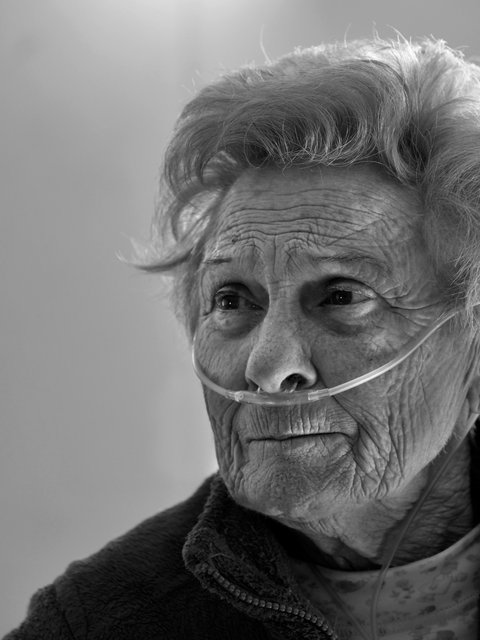
After a stage IV cancer diagnosis, J.M. was awake and mentally clear - but knew things could change quickly. Working through My Health Code gave him and his family the chance to understand what life may look like with "aggressive treatment" vs. treatment focused on helping him stay at home, be comfortable, and enjoy his life.

"It helped me understand what could happen, and not let that decision be taken by someone else. It met the need I had in that moment."

Patient · J.M.

An elderly patient
Before a Surgery

Handing off the weight.

R.K. fell and fractured her hip, and surgery was the next morning. For years she had meant to "get her affairs in order" but kept putting it off. Going through My Health Code the evening before surgery surprised her. It wasn't just that the paperwork was done - it was that she no longer had to carry the worry about her family having to guess.

"It took one more responsibility off my plate. And it made me feel like y'all really cared. You respected the fact that I knew what I was choosing."

Patient · R.K.

An elderly patient with their caregiver at home
When a Loved One Can't Decide

Clarity in the hardest moment.

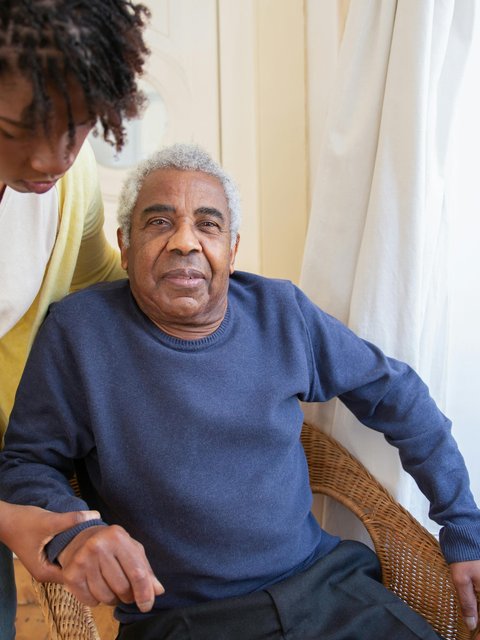
L.A.'s mother had a major stroke and became unconscious in the ICU. The family was suddenly facing choices they'd never prepared for. What does life with a breathing tube look like? Would she have to move out of her home after? Would she be able to eat or walk again? But because her mother had gone through My Health Code months earlier, they didn't have to guess. Her wishes were documented. The family could focus on bringing her home, being with her, and spending that time with dignity.

"In the moment, she was unconscious. But this cleared up all the doubts you may have. I think that's very important."

Caregiver · L.A.

An elderly patient with their caregiver at home
Caring for a Parent

Information anyone could understand.

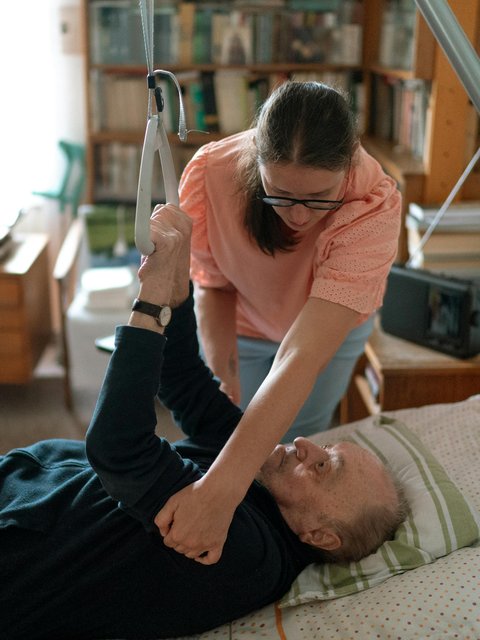
D.T.'s father had become bed-ridden after a series of strokes. The family was preparing for what came next but didn't know how to have the conversation. Working through My Health Code with him gave them the knowledge to understand how different treatments would affect his life, and to focus on what was important to him. Afterward, D.T. said what stood out was how easy and clear the program was.

"It was extremely informative - elementary-level informative. Anyone could understand it."

Caregiver · D.T.

What patients told us

Built with patients, shaped by their feedback.

Still have questions?

There is no such thing as a small question when it comes to your care.
If any of this is unclear, or if you'd like to know how to get started, send us a note - we read every one.

Get in touch